

Japan
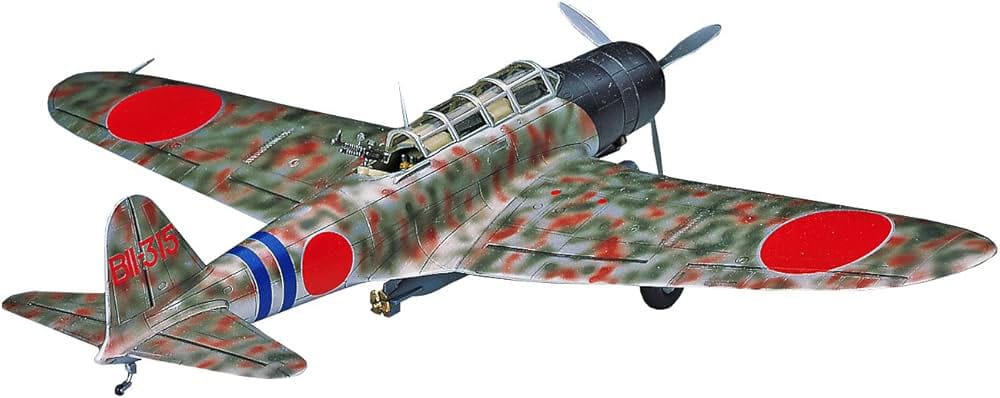
Nakajima B5N2 ‘Kate’
| type |
|---|
|
Plastic model kit |

This boxed set contains:
- 1 x Nakajima B5N2 ‘Kate’ 1/72 scale naval torpedo bomber [A Series]

Imperial Japanese Navy Air Service

In 1935, the Japanese Navy attacked both Mitsubishi and Nakajima.
I ordered a prototype in the name of the attack aircraft on the 10th test ship.
The Navy's demands were only adopted at the time.
It is much higher than the ninety-six-type attack aircraft,
In Nakajima, which received a prototype request,
Since both of them lost to Mitsubishi in the competition of the main models of naval aircraft,
I went to the development with the company luck.
The nine-seven-type on-board attack aircraft that incorporates a number of new axes,
The first Japanese Navy aircraft to have an all-metal monocoque structure
It is a low-wing single-leaf attack aircraft.
Adopted innovative hydraulic pull-in main leg,
The width of the fuselage is narrowly narrowed as a maximum of three-seat aircraft near the cockpit.
The total width is shortened by adopting the upper folding main wing,
It can reduce the storage space in the aircraft carrier.
The propeller is made of all-metal with two-stage variable pitch, three-winger propeller,
takeoff, ascending, cruising, high speed,
The engine power is efficiently demonstrated according to each situation,
The performance has been greatly improved.
On November 16, 1937,
It was adopted as a conventional attack aircraft (B5N1) on the first ship of the Kushichi-class,
Not the original ‘Sakae‘ engine
300hp was also equipped with a ‘light‘ engine with small power,
It was high-performance that exceeded the Navy's demands.
Autumn 1938
‘Hide‘ engine is in practical use and equipped with this,
In December 1939, it was adopted as a conventional attack aircraft (B5N2) on the 3rd ship of the Kusatsu-class aircraft,
Mass production in Nakajima has been switched to the third type.
In December 1941,
Participated in the attack on Pearl Harbor, which was the start of the Pacific War,
Ninety-seven ships aboard six aircraft carriers were bombs.
Concentrated attacks by torpedoes inflicted fatal damage to ships of the U.S. Pacific Fleet.
I gave him the outcome of the war.
Among them, the successful lightning strike of the shallow deep sea surface that was considered impossible to thunderbolt was successful
It is worth mentioning that this machine is combined with the high performance of this machine.
After the Hawaii operation.
in the southwestern Pacific, the pink and south africa
The nine-seven ships mounted on each aircraft carrier of the First Air Fleet,
He was active in the Zero War and the Kuta-kanbo.
[Data] B5N2
Crew: Three.
Total width: 15.518m
Total length: 10.3m
Height: 3.7m
Engine: Nakajima ‘Hide‘ 11type (air-cooled double-star type 14cylinder)
Release power: 1,000hp
Max speed: 378km/h (altitude 3,600m)
Armed: 7.7mm machine gun (upwards and rear fuselage)
Bomb: 800kg×1/250kg×2/60kg×6/30kg×6
Torpedo: 800kg×1
This boxed set contains:
-
1*Nakajima B5N2 ‘Kate’ 1/72 scale naval torpedo bomber [A Series]
In 1935, the Japanese Navy attacked both Mitsubishi and Nakajima.
I ordered a prototype in the name of the attack aircraft on the 10th test ship.
The Navy's demands were only adopted at the time.
It is much higher than the ninety-six-type attack aircraft,
In Nakajima, which received a prototype request,
Since both of them lost to Mitsubishi in the competition of the main models of naval aircraft,
I went to the development with the company luck.
The nine-seven-type on-board attack aircraft that incorporates a number of new axes,
The first Japanese Navy aircraft to have an all-metal monocoque structure
It is a low-wing single-leaf attack aircraft.
Adopted innovative hydraulic pull-in main leg,
The width of the fuselage is narrowly narrowed as a maximum of three-seat aircraft near the cockpit.
The total width is shortened by adopting the upper folding main wing,
It can reduce the storage space in the aircraft carrier.
The propeller is made of all-metal with two-stage variable pitch, three-winger propeller,
takeoff, ascending, cruising, high speed,
The engine power is efficiently demonstrated according to each situation,
The performance has been greatly improved.
On November 16, 1937,
It was adopted as a conventional attack aircraft (B5N1) on the first ship of the Kushichi-class,
Not the original ‘Sakae‘ engine
300hp was also equipped with a ‘light‘ engine with small power,
It was high-performance that exceeded the Navy's demands.
Autumn 1938
‘Hide‘ engine is in practical use and equipped with this,
In December 1939, it was adopted as a conventional attack aircraft (B5N2) on the 3rd ship of the Kusatsu-class aircraft,
Mass production in Nakajima has been switched to the third type.
In December 1941,
Participated in the attack on Pearl Harbor, which was the start of the Pacific War,
Ninety-seven ships aboard six aircraft carriers were bombs.
Concentrated attacks by torpedoes inflicted fatal damage to ships of the U.S. Pacific Fleet.
I gave him the outcome of the war.
Among them, the successful lightning strike of the shallow deep sea surface that was considered impossible to thunderbolt was successful
It is worth mentioning that this machine is combined with the high performance of this machine.
After the Hawaii operation.
in the southwestern Pacific, the pink and south africa
The nine-seven ships mounted on each aircraft carrier of the First Air Fleet,
He was active in the Zero War and the Kuta-kanbo.
[Data] B5N2
Crew: Three.
Total width: 15.518m
Total length: 10.3m
Height: 3.7m
Engine: Nakajima ‘Hide‘ 11type (air-cooled double-star type 14cylinder)
Release power: 1,000hp
Max speed: 378km/h (altitude 3,600m)
Armed: 7.7mm machine gun (upwards and rear fuselage)
Bomb: 800kg×1/250kg×2/60kg×6/30kg×6
Torpedo: 800kg×1