

United Kingdom
Supermarine Spitfire Mk Vb (trop)
| type |
|---|
|
Plastic model kit |

This boxed set contains:
- 1 x Supermarine Spitfire Mk Vb (trop) 1/72 scale fighter aircraft


British Royal Air Force


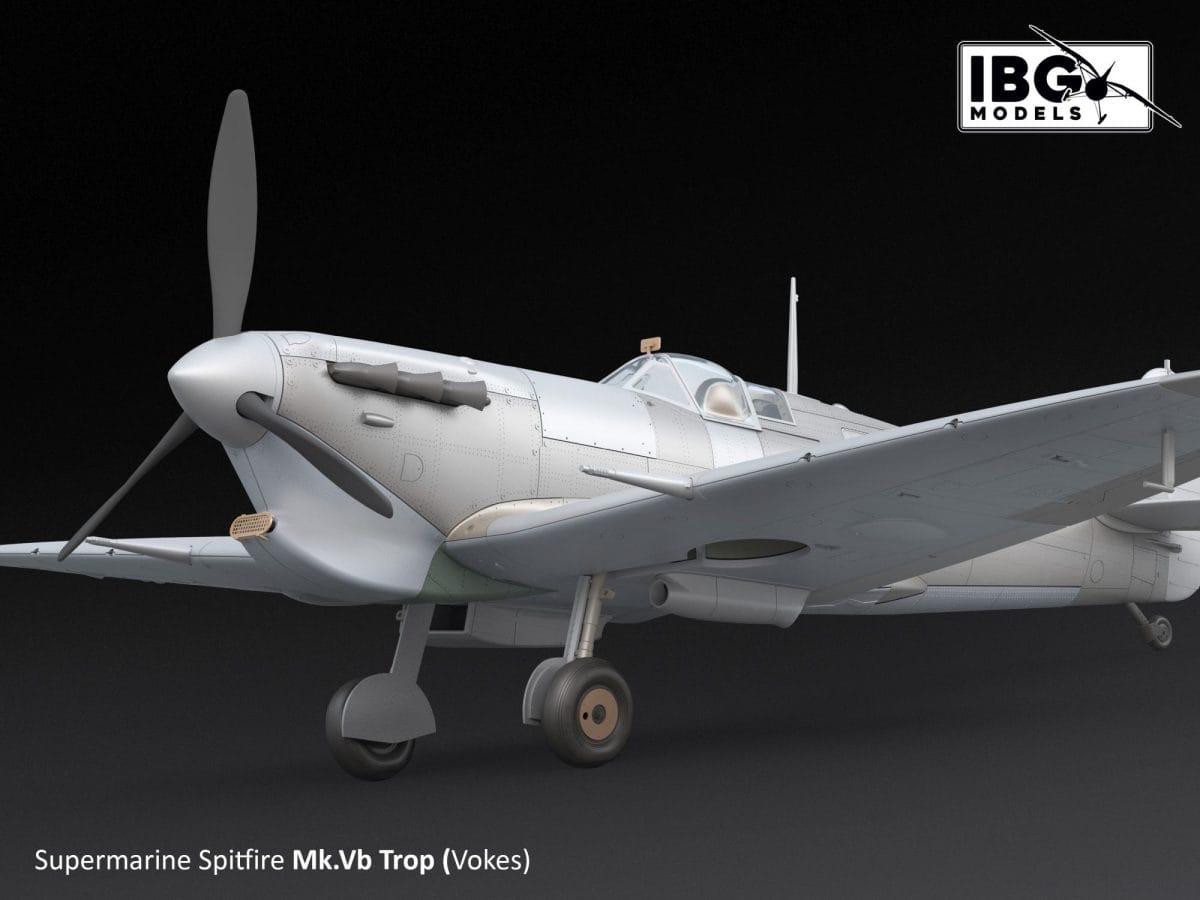
The arrival of Messerschmitt Bf 109F-equipped II./JG 27 in North Africa in September 1941, followed by additional Luftwaffe fighter Gruppen, shifted the balance of air power in the Axis favour. In response, RAF Middle East Command urgently requested Spitfire reinforcements, and it was decided to deploy two squadrons—No. 92 and No. 145 Squadrons RAF—to Egypt. The tropicalisation of the Spitfire Mk V, however, caused significant delays. The first aircraft were not shipped until February 1942. Tropical modifications included the distinctive Vokes dust filter and enlarged oil tank housed in a deeper engine cowling beneath the nose, a revised oil cooler and radiator installation, desert survival equipment stowage, and numerous smaller adaptations intended to improve reliability in harsh desert conditions.
To accelerate delivery, it was decided that fifty tropicalised Spitfires would be shipped to Takoradi on the Gold Coast (modern Ghana), assembled there, and flown across Africa to Egypt via the established Takoradi ferry route. At the same time, a further fifty non-tropicalised airframes were dispatched by sea around the Cape of Good Hope to Port Sudan. The first shipment arrived at Takoradi aboard the SS Lagosian on 3 April 1942. After assembly and test flying, the aircraft began the long ferry flight to Egypt later that month. Allocated initially to No. 145 Squadron, the first Spitfires entered combat on 1 June 1942. Although their numbers were initially too small to alter the air situation decisively, their impact grew steadily as additional aircraft and trained pilots became available. By the time of the Second Battle of El Alamein in October–November 1942—one of the decisive Allied victories of the North African campaign—the Western Desert Air Force fielded three Spitfire squadrons in Egypt: No. 92, No. 145 and No. 601 Squadrons. Operating primarily in the air-superiority role, they increasingly challenged the Luftwaffe and helped erode the effectiveness of Axis air operations over the battlefield.
Following the victory at El Alamein, Spitfires accompanied the Allied advance across Libya into Tunisia, while further RAF units converted from Hurricanes and Kittyhawks to the type. Their growing presence provided the Western Desert Air Force with a modern fighter capable of matching the Bf 109 on more equal terms. After the Allied landings in French North Africa during Operation Torch in November 1942, additional Spitfire units were deployed from Gibraltar and the United Kingdom to Algeria and Morocco. Together with rapidly expanding USAAF fighter and bomber formations, these reinforcements enabled the Allies to achieve increasing air superiority over Tunisia. Throughout the winter and spring of 1942–43, Allied fighters and bombers conducted relentless attacks against Axis airfields, ports, shipping and supply lines, gradually overwhelming German and Italian air forces in the theatre.
By the time the Tunisian campaign ended in May 1943, Allied air power had become a decisive factor in the destruction of Axis forces in North Africa. The Spitfire, which had arrived in Egypt only a year earlier in small numbers, had become one of the principal fighters of the Allied air offensive, contributing significantly to the campaign that ended with the surrender of more than 250,000 Axis troops in Tunisia.
This boxed set contains:
-
1*Supermarine Spitfire Mk Vb (trop) 1/72 scale fighter aircraft
The arrival of Messerschmitt Bf 109F-equipped II./JG 27 in North Africa in September 1941, followed by additional Luftwaffe fighter Gruppen, shifted the balance of air power in the Axis favour. In response, RAF Middle East Command urgently requested Spitfire reinforcements, and it was decided to deploy two squadrons—No. 92 and No. 145 Squadrons RAF—to Egypt. The tropicalisation of the Spitfire Mk V, however, caused significant delays. The first aircraft were not shipped until February 1942. Tropical modifications included the distinctive Vokes dust filter and enlarged oil tank housed in a deeper engine cowling beneath the nose, a revised oil cooler and radiator installation, desert survival equipment stowage, and numerous smaller adaptations intended to improve reliability in harsh desert conditions.
To accelerate delivery, it was decided that fifty tropicalised Spitfires would be shipped to Takoradi on the Gold Coast (modern Ghana), assembled there, and flown across Africa to Egypt via the established Takoradi ferry route. At the same time, a further fifty non-tropicalised airframes were dispatched by sea around the Cape of Good Hope to Port Sudan. The first shipment arrived at Takoradi aboard the SS Lagosian on 3 April 1942. After assembly and test flying, the aircraft began the long ferry flight to Egypt later that month. Allocated initially to No. 145 Squadron, the first Spitfires entered combat on 1 June 1942. Although their numbers were initially too small to alter the air situation decisively, their impact grew steadily as additional aircraft and trained pilots became available. By the time of the Second Battle of El Alamein in October–November 1942—one of the decisive Allied victories of the North African campaign—the Western Desert Air Force fielded three Spitfire squadrons in Egypt: No. 92, No. 145 and No. 601 Squadrons. Operating primarily in the air-superiority role, they increasingly challenged the Luftwaffe and helped erode the effectiveness of Axis air operations over the battlefield.
Following the victory at El Alamein, Spitfires accompanied the Allied advance across Libya into Tunisia, while further RAF units converted from Hurricanes and Kittyhawks to the type. Their growing presence provided the Western Desert Air Force with a modern fighter capable of matching the Bf 109 on more equal terms. After the Allied landings in French North Africa during Operation Torch in November 1942, additional Spitfire units were deployed from Gibraltar and the United Kingdom to Algeria and Morocco. Together with rapidly expanding USAAF fighter and bomber formations, these reinforcements enabled the Allies to achieve increasing air superiority over Tunisia. Throughout the winter and spring of 1942–43, Allied fighters and bombers conducted relentless attacks against Axis airfields, ports, shipping and supply lines, gradually overwhelming German and Italian air forces in the theatre.
By the time the Tunisian campaign ended in May 1943, Allied air power had become a decisive factor in the destruction of Axis forces in North Africa. The Spitfire, which had arrived in Egypt only a year earlier in small numbers, had become one of the principal fighters of the Allied air offensive, contributing significantly to the campaign that ended with the surrender of more than 250,000 Axis troops in Tunisia.