

United States
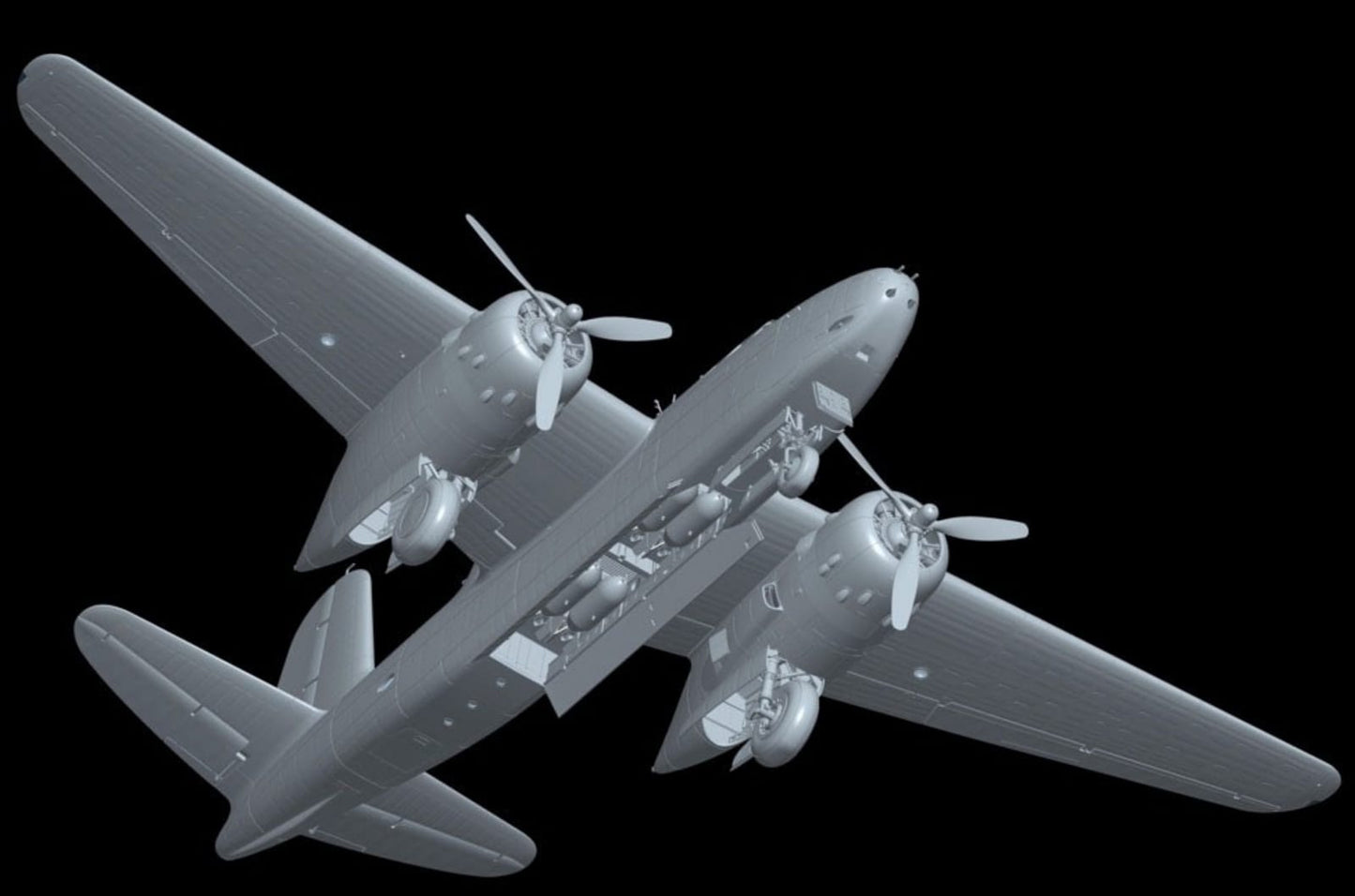
Douglas A-20G Havoc
| type | length | width |
|---|---|---|
|
Plastic model kit |
457mm |
587mm |


This boxed set contains:
- 1 x Douglas A-20G Havoc 1/32 scale attacker aircraft


Royal Australian Air Force


The Douglas A-20 Havoc, also known as the DB-7, was a fast, twin-engine light bomber and attack aircraft used by the Royal Australian Air Force (RAAF) during World War II.
Originally developed by the United States, the A-20 was supplied to Australia under the Lend-Lease program beginning in 1942.
In RAAF service, the A-20 Havoc served primarily in the South West Pacific Theatre, where its speed, agility, and firepower made it well-suited for low-level bombing, strafing runs, and ground-attack missions.
The aircraft was typically crewed by three men: a pilot, a bombardier/navigator, and a gunner.
It was equipped with a combination of forward-firing machine guns, internal bomb bays, and underwing bomb or rocket mounts.
RAAF units such as No. 22 Squadron operated the A-20 with notable success, particularly during campaigns in New Guinea and the surrounding islands.
The aircraft proved highly effective in disrupting Japanese supply lines, airfields, and troop positions.
Though eventually superseded by more modern aircraft like the Bristol Beaufighter and Douglas B-25 Mitchell, the A-20 Havoc played a crucial role in the early to mid-war efforts of the RAAF, contributing significantly to the Allied advance in the Pacific.
This boxed set contains:
-
1*Douglas A-20G Havoc 1/32 scale attacker aircraft
The Douglas A-20 Havoc, also known as the DB-7, was a fast, twin-engine light bomber and attack aircraft used by the Royal Australian Air Force (RAAF) during World War II.
Originally developed by the United States, the A-20 was supplied to Australia under the Lend-Lease program beginning in 1942.
In RAAF service, the A-20 Havoc served primarily in the South West Pacific Theatre, where its speed, agility, and firepower made it well-suited for low-level bombing, strafing runs, and ground-attack missions.
The aircraft was typically crewed by three men: a pilot, a bombardier/navigator, and a gunner.
It was equipped with a combination of forward-firing machine guns, internal bomb bays, and underwing bomb or rocket mounts.
RAAF units such as No. 22 Squadron operated the A-20 with notable success, particularly during campaigns in New Guinea and the surrounding islands.
The aircraft proved highly effective in disrupting Japanese supply lines, airfields, and troop positions.
Though eventually superseded by more modern aircraft like the Bristol Beaufighter and Douglas B-25 Mitchell, the A-20 Havoc played a crucial role in the early to mid-war efforts of the RAAF, contributing significantly to the Allied advance in the Pacific.