

United Kingdom
Supermarine Spitfire PR Mk Ic / PR Mk Ig
| type |
|---|
|
Plastic model kit |

This boxed set contains:
- 1 x Supermarine Spitfire PR Mk Ic / PR Mk Ig 1/72 scale reconaissance aircraft


British Royal Air Force


The Supermarine Spitfire is without doubt one of the most iconic and recognisable aircraft of the Second World War. While its story spans the entirety of the conflict—from the earliest days to the final victory—it was the early variants powered by the Rolls-Royce Merlin engine with a single-stage supercharger that laid the foundations of the modern Royal Air Force, both technologically and symbolically.
The Spitfire’s origins trace back to the 1930s, when Great Britain, recognizing the growing threat posed by Nazi Germany’s expanding air force, began modernizing its own aerial capabilities. Reginald Mitchell’s design, influenced by his experience with high-speed Schneider Trophy racing aircraft, proved to be a masterpiece: aerodynamically clean, structurally modern, and exceptionally agile. The Spitfire quickly became the RAF’s premier fighter, embodying the new spirit of a reformed and ready air force.
Early operational variants, such as the Mk I and Mk II, armed with eight Browning machine guns, played a central role in the Battle of Britain, giving the RAF the means to resist and ultimately repel the Luftwaffe’s aerial assault. Later models, like the Mk V, introduced heavier armament and improved performance, while retaining the Spitfire’s hallmark manoeuvrability and flying pleasure.
Among the lesser-known but crucial developments were the high-altitude versions, such as the Spitfire Mk VI, which featured extended wingtips, a pressurized cockpit, and specialized equipment for high-altitude interception missions. Designed to counter enemy reconnaissance and bomber aircraft operating at extreme altitudes, these variants pushed the Merlin engine to its limits. In parallel, Photo Reconnaissance (PR) versions were developed, optimized for long-range missions with additional fuel tanks, stripped-down equipment, and high-altitude capability. These unarmed but swift aircraft flew deep over enemy territory, capturing vital intelligence with unmatched precision.
Spitfires powered by early single-stage supercharged Merlins saw combat on every front of the war: from the white cliffs of southern England, across the deserts of North Africa, over the besieged skies of Malta, and into the jungles of the Far East. Their adaptability and reliability made them indispensable across vastly different environments and theatres of war.
Although the single-stage Merlin engine defined the early war years, it was by no means the end of the Spitfire’s evolution. Later models were fitted with two-stage supercharged Merlins, dramatically improving high-altitude performance, and eventually with the even more powerful Griffon engine, extending the aircraft’s relevance and capability to the very end of the war—and even beyond.
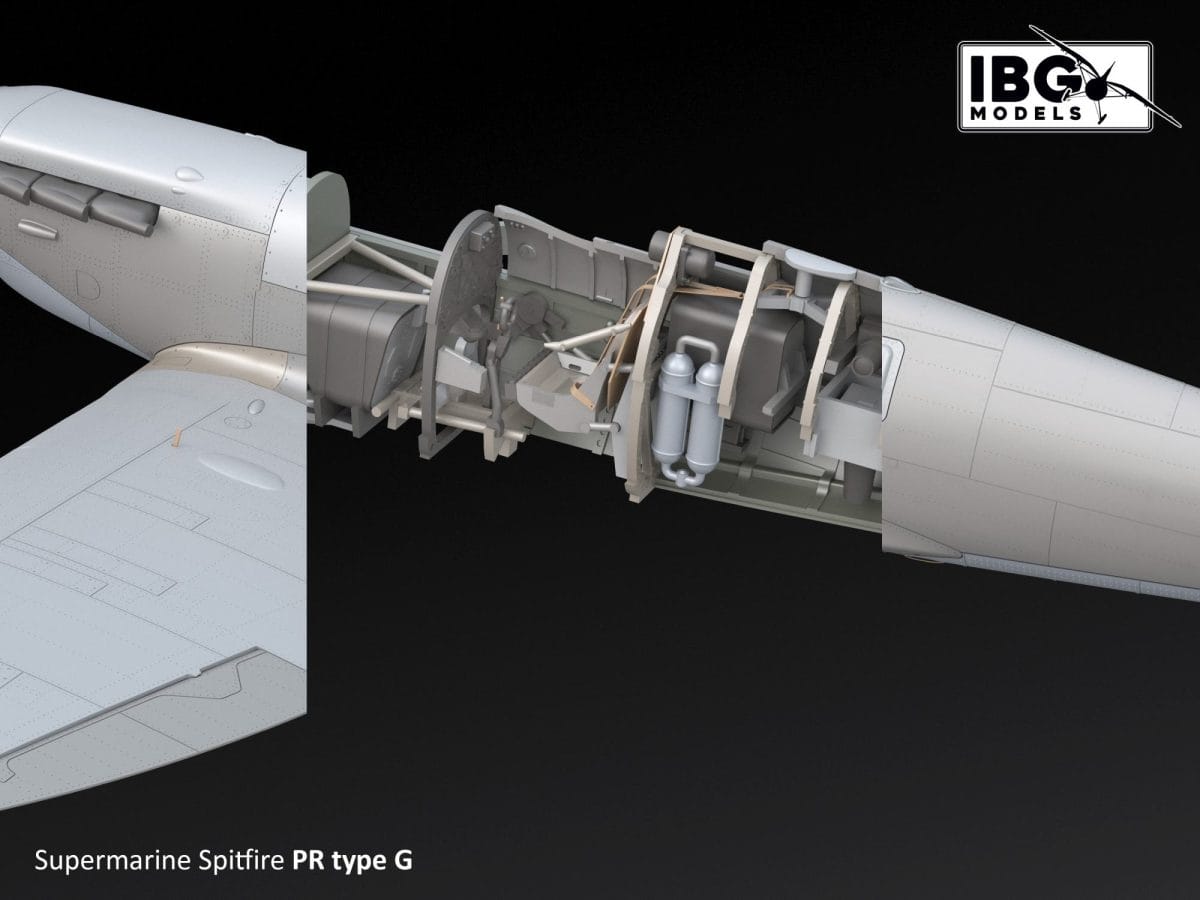
Unlike most reconnaissance Spitfires, which relied on high altitude and speed as their primary means of protection, the PR Type G was developed to carry out photographic reconnaissance missions at low and medium altitudes. Low-level reconnaissance flights were among the most dangerous operations undertaken by RAF aircrews.This required a completely different approach to both aircraft configuration and operational tactics. To obtain photographs with sufficient detail, pilots were required to fly directly over their targets, often within range of light anti-aircraft artillery, machine-gun fire, and enemy fighters. Unlike the high-altitude PR variants, which frequently operated beyond the reach of most defensive measures, PR Type G crews faced constant exposure to hostile fire and had to rely on their flying skills, speed, and low-altitude maneuvering to survive. The Type G retained its fighter armament, providing pilots with the means to defend themselves if attacked. Engaging enemy aircraft was discouraged unless absolutely necessary, as preserving the reconnaissance mission and returning with the photographic evidence always took priority. Despite these dangers, the Type G played an important role in the development of Allied photographic reconnaissance. Early missions flown by armed reconnaissance Spitfires contributed to obtaining the first detailed photographs of German radar installations, providing invaluable intelligence on the Luftwaffe’s growing early-warning network. Equally important were reconnaissance flights over occupied Norway, during which German warships concealed within the fjords were located and photographed. These images enabled Allied intelligence to monitor the movements of major Kriegsmarine units and provided vital information for British naval planners. Although later specialized reconnaissance variants offered greater altitude performance and longer range, the PR Type G remains a testament to the courage of the pilots who carried out some of the war’s most hazardous missions—flying low over enemy territory, where success depended on a combination of precision, speed, and exceptional airmanship.
This boxed set contains:
-
1*Supermarine Spitfire PR Mk Ic / PR Mk Ig 1/72 scale reconaissance aircraft
The Supermarine Spitfire is without doubt one of the most iconic and recognisable aircraft of the Second World War. While its story spans the entirety of the conflict—from the earliest days to the final victory—it was the early variants powered by the Rolls-Royce Merlin engine with a single-stage supercharger that laid the foundations of the modern Royal Air Force, both technologically and symbolically.
The Spitfire’s origins trace back to the 1930s, when Great Britain, recognizing the growing threat posed by Nazi Germany’s expanding air force, began modernizing its own aerial capabilities. Reginald Mitchell’s design, influenced by his experience with high-speed Schneider Trophy racing aircraft, proved to be a masterpiece: aerodynamically clean, structurally modern, and exceptionally agile. The Spitfire quickly became the RAF’s premier fighter, embodying the new spirit of a reformed and ready air force.
Early operational variants, such as the Mk I and Mk II, armed with eight Browning machine guns, played a central role in the Battle of Britain, giving the RAF the means to resist and ultimately repel the Luftwaffe’s aerial assault. Later models, like the Mk V, introduced heavier armament and improved performance, while retaining the Spitfire’s hallmark manoeuvrability and flying pleasure.
Among the lesser-known but crucial developments were the high-altitude versions, such as the Spitfire Mk VI, which featured extended wingtips, a pressurized cockpit, and specialized equipment for high-altitude interception missions. Designed to counter enemy reconnaissance and bomber aircraft operating at extreme altitudes, these variants pushed the Merlin engine to its limits. In parallel, Photo Reconnaissance (PR) versions were developed, optimized for long-range missions with additional fuel tanks, stripped-down equipment, and high-altitude capability. These unarmed but swift aircraft flew deep over enemy territory, capturing vital intelligence with unmatched precision.
Spitfires powered by early single-stage supercharged Merlins saw combat on every front of the war: from the white cliffs of southern England, across the deserts of North Africa, over the besieged skies of Malta, and into the jungles of the Far East. Their adaptability and reliability made them indispensable across vastly different environments and theatres of war.
Although the single-stage Merlin engine defined the early war years, it was by no means the end of the Spitfire’s evolution. Later models were fitted with two-stage supercharged Merlins, dramatically improving high-altitude performance, and eventually with the even more powerful Griffon engine, extending the aircraft’s relevance and capability to the very end of the war—and even beyond.
Unlike most reconnaissance Spitfires, which relied on high altitude and speed as their primary means of protection, the PR Type G was developed to carry out photographic reconnaissance missions at low and medium altitudes. Low-level reconnaissance flights were among the most dangerous operations undertaken by RAF aircrews.This required a completely different approach to both aircraft configuration and operational tactics. To obtain photographs with sufficient detail, pilots were required to fly directly over their targets, often within range of light anti-aircraft artillery, machine-gun fire, and enemy fighters. Unlike the high-altitude PR variants, which frequently operated beyond the reach of most defensive measures, PR Type G crews faced constant exposure to hostile fire and had to rely on their flying skills, speed, and low-altitude maneuvering to survive. The Type G retained its fighter armament, providing pilots with the means to defend themselves if attacked. Engaging enemy aircraft was discouraged unless absolutely necessary, as preserving the reconnaissance mission and returning with the photographic evidence always took priority. Despite these dangers, the Type G played an important role in the development of Allied photographic reconnaissance. Early missions flown by armed reconnaissance Spitfires contributed to obtaining the first detailed photographs of German radar installations, providing invaluable intelligence on the Luftwaffe’s growing early-warning network. Equally important were reconnaissance flights over occupied Norway, during which German warships concealed within the fjords were located and photographed. These images enabled Allied intelligence to monitor the movements of major Kriegsmarine units and provided vital information for British naval planners. Although later specialized reconnaissance variants offered greater altitude performance and longer range, the PR Type G remains a testament to the courage of the pilots who carried out some of the war’s most hazardous missions—flying low over enemy territory, where success depended on a combination of precision, speed, and exceptional airmanship.