

Germany
Henschel Hs 123 A-1
| type | length | width |
|---|---|---|
|
Plastic model kit |
330mm |
272mm |


This boxed set contains:
- 1 x Henschel Hs 123 A-1 1/32 scale biplane dive bomber aircraft


German Air Force
Serial production of the Hs 123 aircraft began in September 1936. Its main purpose was to provide air support for ground forces, with armament consisting of two synchronized machine guns and bombs weighing up to 450 kg. The Hs 123 was supplied to infantry direct support aircraft groups and widely used by training units. During World War II, these aircraft demonstrated high survivability while being deployed in the invasion of Poland, and later in France and the Balkans. Early production models were distinguishable by the absence of a fairing behind the pilot’s cockpit.
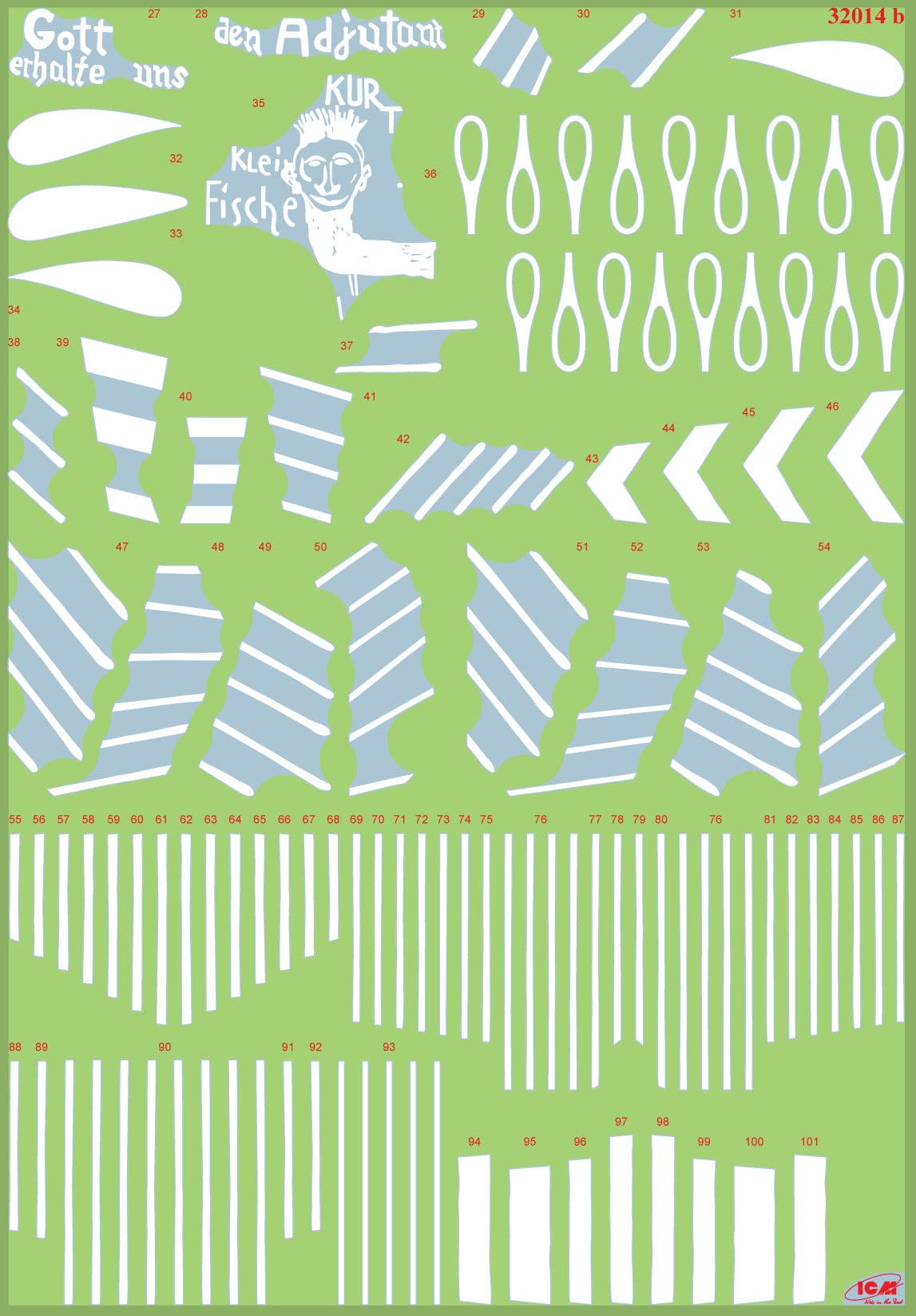
In the summer of 1938, an interesting story unfolded involving one such Hs 123. Lieutenant Siegfried Hamann, the adjutant of the 3./Fliegergruppe 50 commander who had no formal pilot training, secretly learned to fly the aircraft and later confessed this to his commander. Given permission to demonstrate his skills, Hamann was provided with an Hs 123 that ground personnel had painted with large, whimsical inscriptions of a humorous and skeptical nature—expressing their disbelief in his abilities. Despite this skepticism, Hamann’s flight was successful, proving his capabilities and earning him status as a full-fledged pilot. By 1939, he had joined III./St.G2 as a pilot and participated in the attack on Poland.
This boxed set contains:
-
1*Henschel Hs 123 A-1 1/32 scale biplane dive bomber aircraft
Serial production of the Hs 123 aircraft began in September 1936. Its main purpose was to provide air support for ground forces, with armament consisting of two synchronized machine guns and bombs weighing up to 450 kg. The Hs 123 was supplied to infantry direct support aircraft groups and widely used by training units. During World War II, these aircraft demonstrated high survivability while being deployed in the invasion of Poland, and later in France and the Balkans. Early production models were distinguishable by the absence of a fairing behind the pilot’s cockpit.
In the summer of 1938, an interesting story unfolded involving one such Hs 123. Lieutenant Siegfried Hamann, the adjutant of the 3./Fliegergruppe 50 commander who had no formal pilot training, secretly learned to fly the aircraft and later confessed this to his commander. Given permission to demonstrate his skills, Hamann was provided with an Hs 123 that ground personnel had painted with large, whimsical inscriptions of a humorous and skeptical nature—expressing their disbelief in his abilities. Despite this skepticism, Hamann’s flight was successful, proving his capabilities and earning him status as a full-fledged pilot. By 1939, he had joined III./St.G2 as a pilot and participated in the attack on Poland.