

Germany
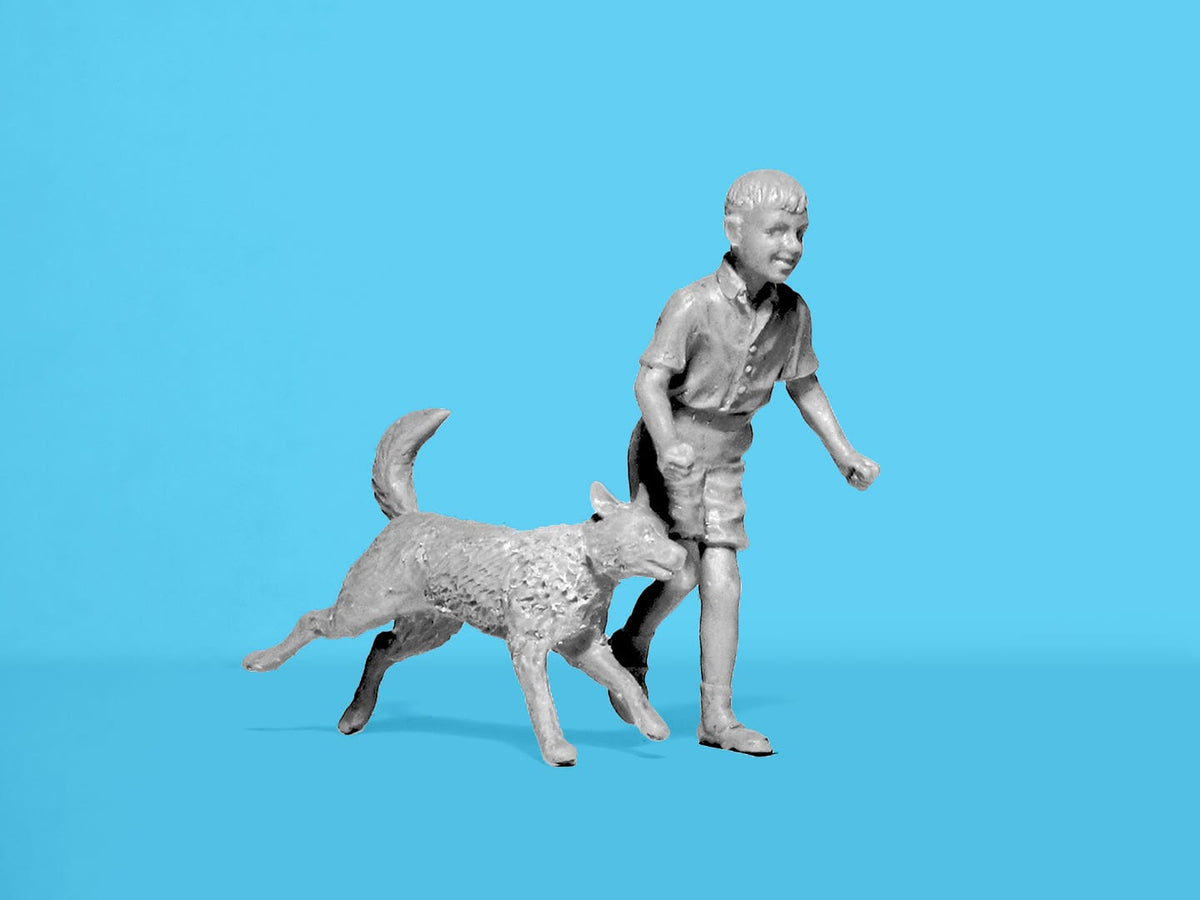
German Civilians ‘The Last Peaceful Autumn’
| type |
|---|
|
Plastic model kit |

This boxed set contains:
- 1 x German Civilians ‘The Last Peaceful Autumn’ 1/35 scale civilians with dog
Germany


In the 1930s, Germany underwent a rapid transformation from deep economic crisis to recovery, driven by the ruling regime’s aggressive and often harsh domestic policies. These changes radically affected the everyday lives and living standards of ordinary citizens. At the beginning of the decade, the Great Depression had plunged Germany into a severe economic crisis, with unemployment exceeding six million. After the Nazi Party (NSDAP) came to power in 1933, the government introduced a new economic policy. Through centralized control, the regime quickly achieved a kind of “economic miracle”: unemployment was reduced, large-scale infrastructure and military projects were launched, and the country underwent widespread militarization.
For the average German family, the 1930s seemed to bring a period of stability and a sense of “restored national pride.” However, private life was increasingly subordinated to the state ideology of Gleichschaltung — the coordination and alignment of all aspects of society. Thus, for an average apolitical German, the first half of the 1930s appeared to offer an escape from poverty, the prospect of employment, orderly streets, and social welfare programs. Yet behind this façade lay the complete destruction of civil liberties, strict censorship, terror against minorities and political dissidents, and an artificially sustained war economy that would ultimately lead the country to the catastrophe of World War II.
Key Features
Figure set depicting a typical German family of the late 1930s
Detailed clothing and realistic facial expressions
Ideal for dioramas depicting everyday life on the eve of World War II
This boxed set contains:
-
1*German Civilians ‘The Last Peaceful Autumn’ 1/35 scale civilians with dog
In the 1930s, Germany underwent a rapid transformation from deep economic crisis to recovery, driven by the ruling regime’s aggressive and often harsh domestic policies. These changes radically affected the everyday lives and living standards of ordinary citizens. At the beginning of the decade, the Great Depression had plunged Germany into a severe economic crisis, with unemployment exceeding six million. After the Nazi Party (NSDAP) came to power in 1933, the government introduced a new economic policy. Through centralized control, the regime quickly achieved a kind of “economic miracle”: unemployment was reduced, large-scale infrastructure and military projects were launched, and the country underwent widespread militarization.
For the average German family, the 1930s seemed to bring a period of stability and a sense of “restored national pride.” However, private life was increasingly subordinated to the state ideology of Gleichschaltung — the coordination and alignment of all aspects of society. Thus, for an average apolitical German, the first half of the 1930s appeared to offer an escape from poverty, the prospect of employment, orderly streets, and social welfare programs. Yet behind this façade lay the complete destruction of civil liberties, strict censorship, terror against minorities and political dissidents, and an artificially sustained war economy that would ultimately lead the country to the catastrophe of World War II.
Key Features
Figure set depicting a typical German family of the late 1930s
Detailed clothing and realistic facial expressions
Ideal for dioramas depicting everyday life on the eve of World War II